


How to Spot Hidden Roof Leaks Before Fall Weather Arrives in Tolar, TX
September in Tolar, TX is a transition month. We are still feeling plenty of late-summer heat, but fall weather is right around the corner. That means cooler nights, shifting winds, pop-up thunderstorms, and the occasional strong rain system moving through Hood County and surrounding areas. If your roof has a small weakness now, September is the time to find it—before fall rain exposes it the hard way.
At Rock Solid Restorations LLC, we have seen many homeowners discover roof leaks only after water stains appear on ceilings, insulation gets soaked, or mold starts forming in the attic. The tricky part is that many roof leaks stay hidden for weeks or even months before obvious damage shows up inside your home.
Here is how to spot hidden roof leaks before fall weather arrives—and why working with a local Tolar roofing and restoration company can help protect your home.

Key Takeaways:
- Check your attic, ceilings, roof penetrations, gutters, and exterior walls for early signs of hidden roof leaks before fall storms arrive.
- September weather in Tolar, TX can bring heat, wind, and heavy rain that make small roofing issues worse quickly.
- Look for subtle warning signs like musty odors, lifted shingles, rusted flashing, granules in gutters, and small ceiling stains.
- Schedule a professional roof inspection if you suspect storm damage, aging materials, or leaks around vents, chimneys, skylights, or valleys.
Why September Is the Right Time to Check Your Roof in Tolar, TX
September can be unpredictable in North Texas. Around Tolar, we often see hot afternoons, cooler mornings, gusty winds, and seasonal thunderstorms. After months of intense summer sun, roofing materials may already be stressed. Shingles can become brittle, seal strips can weaken, and flashing can shift slightly from expansion and contraction.
When fall weather arrives, those small problems can turn into active leaks. A tiny gap around a vent pipe, a lifted shingle, or a cracked flashing seal may not seem urgent during dry weather. But when wind-driven rain hits your roof from the right angle, water can find its way in fast.
Taking time in September to inspect your roof gives you a chance to fix issues before colder, wetter weather settles in.
Early Signs of a Hidden Roof Leak Inside Your Home
Hidden roof leaks often show up indoors before you ever notice a missing shingle outside. The key is knowing what to look for. Sometimes the warning signs are subtle and easy to ignore.
Walk through your home and look closely at ceilings, walls, closets, and attic access areas. Pay special attention after a rainstorm, even if it was brief.
- Ceiling stains: Brown, yellow, or gray rings on drywall may indicate water intrusion from above.
- Peeling paint or bubbling texture: Moisture can cause paint, tape, or ceiling texture to separate.
- Musty odors: A damp smell in a room, hallway, or closet may point to trapped moisture.
- Soft drywall: If a ceiling or wall feels spongy, water may already be damaging the material.
- Dark spots near vents or light fixtures: Water can travel along framing and appear around ceiling penetrations.
One important thing to remember: the location of the stain is not always the location of the leak. Water can enter near a roof vent, run down a rafter, and appear several feet away on your ceiling.
“We thought the small spot in our hallway was just old paint, but Rock Solid Restorations found a leak around a roof vent before it caused major damage. I’m glad we called before the next storm came through.”
Local homeowner near Tolar, TX
Check the Attic Before Fall Rain Moves In
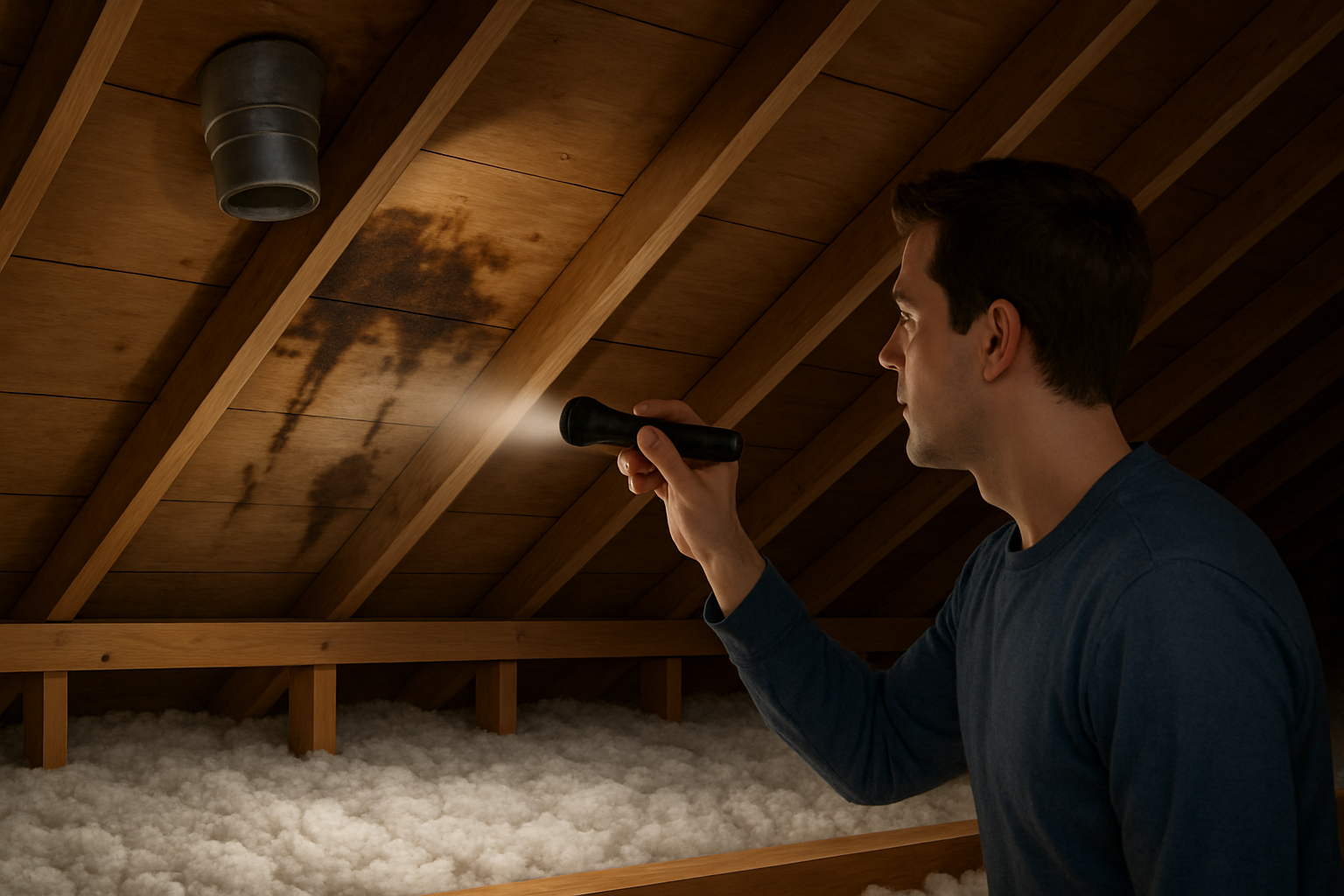
Your attic is one of the best places to spot roof leaks early. If it is safe to access, take a flashlight and look for signs of moisture. Try to inspect during daylight, because pinholes of sunlight may reveal gaps in the roofing system.
In a Tolar home, attic heat can be intense through the summer. That heat can also dry small leaks quickly, making them harder to notice. Look carefully around common problem areas.
- Dark staining on rafters, decking, or insulation
- Wet or compressed insulation
- Rusty nails protruding through the roof deck
- Water trails running down wood framing
- Daylight showing around vents, chimneys, or roof penetrations
- Mold-like growth or mildew odors
If you see moisture or staining in the attic, do not ignore it. Even if it feels dry at the moment, it may become active again with the next heavy rain.
Exterior Roof Clues That Point to Hidden Leaks
You do not have to climb on your roof to notice possible problems. In fact, we do not recommend homeowners walk on a roof unless they have the right safety equipment and experience. Instead, step back from your home and look from the ground, or use binoculars if needed.
After a hot Tolar summer, shingles and roof components can show signs of wear. Watch for:
- Lifted or curled shingles: Wind can drive rain underneath loose shingles.
- Missing shingles: Even one missing shingle can expose underlayment and decking.
- Cracked rubber boots around vent pipes: These are a very common source of hidden roof leaks.
- Damaged flashing: Flashing around chimneys, walls, valleys, and roof edges must be sealed properly.
- Granules in gutters: Heavy granule loss may mean shingles are aging or storm-damaged.
- Sagging areas: A dip in the roofline may indicate moisture damage or structural concerns.
Pay special attention to roof valleys. Valleys carry a large volume of water during storms, and debris buildup can force water under shingles. In September, leaves, twigs, and storm debris can begin collecting there before fall is in full swing.
Do Not Forget Gutters, Downspouts, and Fascia
Gutters play a major role in keeping water away from your roof and foundation. When gutters are clogged, water can back up under shingles or spill behind the gutter system. This can damage fascia boards, soffits, siding, and even interior walls.
Before fall weather arrives, make sure your gutters and downspouts are clear. Look for sagging sections, loose fasteners, rust, and water marks on the fascia. If you notice staining below the roof edge, it may mean water is not draining correctly.
In Tolar, sudden September downpours can overwhelm a poorly maintained gutter system. A quick inspection now can prevent bigger problems later.
Common Roof Leak Areas We Inspect
At Rock Solid Restorations LLC, we know that roof leaks often begin in predictable places. During an inspection, we look beyond the obvious and check the vulnerable areas where water is most likely to enter.
- Pipe boots and plumbing vent seals
- Chimney flashing and counterflashing
- Skylights and roof windows
- Roof valleys and low-slope sections
- Ridge vents and attic ventilation components
- Wall-to-roof transitions
- Storm-damaged shingles and impact marks
- Nail pops and exposed fasteners
Finding the true source of a leak matters. Simply sealing the visible stain or patching the wrong area can allow water to keep entering and causing hidden damage.

Why Hidden Roof Leaks Should Be Fixed Quickly
A small roof leak may not seem like an emergency, but water damage spreads. Once moisture enters your roofing system, it can affect decking, rafters, insulation, drywall, electrical components, and indoor air quality.
Delaying repairs can lead to:
- Higher repair costs
- Mold and mildew concerns
- Damaged insulation and reduced energy efficiency
- Ceiling and drywall repairs
- Wood rot in decking, fascia, or framing
- Reduced roof lifespan
September is an ideal time to act because roofers can often address minor repairs before weather patterns become more disruptive. It is much easier to repair a leak on a clear day than during an active storm.
Why Choose Rock Solid Restorations LLC?
When you call Rock Solid Restorations LLC, you are working with a local company that understands homes, weather, and roofing conditions in Tolar, TX. We know what North Texas heat, wind, hail, and heavy rain can do to a roof. More importantly, we know how to identify issues before they become expensive surprises.
Our customers choose us because we provide honest guidance, detailed inspections, and quality workmanship. We do not believe in scare tactics. We believe in showing you what we find, explaining your options clearly, and helping you make the best decision for your home.
Here is what you can expect from Rock Solid Restorations LLC:
- Local knowledge: We understand the roofing challenges that come with September weather in Tolar and the surrounding area.
- Thorough inspections: We look for the source of the problem, not just the obvious symptoms.
- Clear communication: We explain what is urgent, what can be monitored, and what repairs may be needed.
- Quality restoration work: Our goal is to protect your home with repairs that are built to last.
- Customer-focused service: We treat your home with respect and stand behind our work.
Schedule Your September Roof Leak Inspection
Before fall storms arrive in Tolar, take a few minutes to look for signs of hidden roof leaks. Check your ceilings, attic, gutters, and roofline. If something looks suspicious—or if your roof has been through recent wind, hail, or heavy rain—do not wait for the next storm to confirm the problem.
Rock Solid Restorations LLC is here to help protect your home before small leaks turn into major damage. Whether you need a roof inspection, leak repair, storm damage assessment, or restoration services, our team is ready to provide dependable local service.
Contact Rock Solid Restorations LLC in Tolar, TX today to schedule your roof inspection and get your home ready for fall weather.
